Anderson Conveyor Services implemented an innovative ceramic-lined hard skirt solution for a critical circuit conveyor at Rio Tinto’s Weipa Operations. When traditional materials failed within weeks under extreme operating conditions, our team redesigned the system to withstand the demanding bauxite handling environment. The solution extended component life by over 100%, eliminated chronic spillage issues, and protected a multi-million dollar belt investment. This project exemplifies our commitment to continuous improvement and demonstrates how specialised expertise delivers measurable cost savings for remote mining operations.
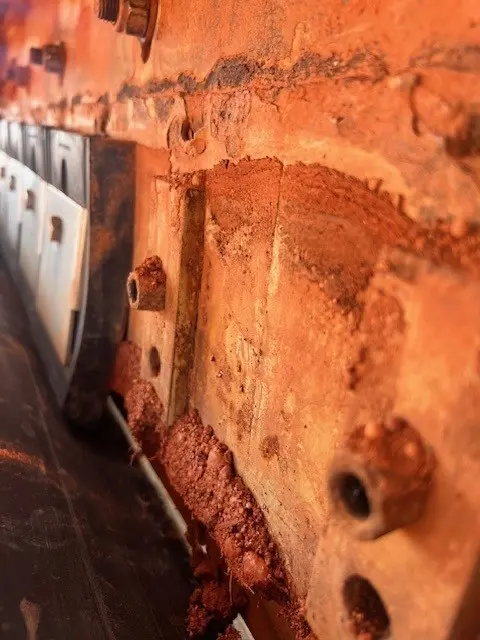
A key circuit conveyor at Rio Tinto’s bauxite operation faced rapid hard skirt deterioration, with components wearing out in just 4-5 weeks. Operating at 20% over design capacity, the plant experienced excessive spillage that created safety hazards and accelerated wear on a conveyor belt valued at approximately $1.8 million. Traditional replacement materials couldn’t withstand the harsh conditions, forcing frequent maintenance interventions and threatening premature belt failure. The client needed an innovative solution to extend component life and protect their substantial belt investment while maintaining production throughput.
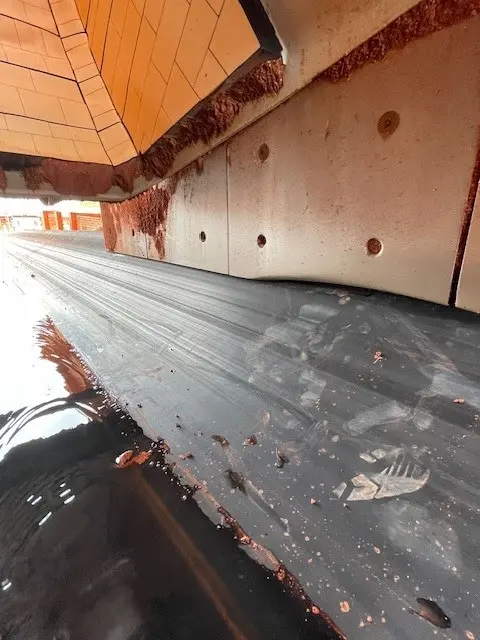
Rather than continuing costly reactive replacements, our team conducted comprehensive analysis of failure points and material flow patterns. We collaborated closely with site management to design a ceramic-lined hard skirt system specifically engineered for bauxite handling under extreme conditions. Our solution required careful integration with existing infrastructure to minimize implementation disruption. We developed a detailed installation plan that could be executed within standard maintenance windows, avoiding additional downtime. This proactive, engineering-focused approach addressed the root cause rather than symptoms, demonstrating our commitment to delivering long-term value.
The ceramic-lined hard skirt implementation extended component life from 4-5 weeks to over 9 weeks initially, with projected lifespan of several months. The innovation virtually eliminated spillage issues, creating a safer work environment and dramatically reducing belt wear. Based on current performance, the expected belt replacement cycle extended from 18 months to 3-4 years, representing direct savings of approximately $1.8 million in avoided replacement costs. Additionally, reduced maintenance frequency decreased scheduled downtime, allowing site resources to focus on other critical improvements and demonstrating measurable return on our continuous improvement philosophy.