Anderson Conveyor Services successfully resolved chronic tracking issues on a 2,200mm wide plant feed conveyor carrying 6,000 tonnes per hour of crude ore. Where previous rectification attempts had failed, our systematic engineering approach identified root causes including structural clearance issues, inadequate tracking frame design, and take-up trolley drift. Through comprehensive field analysis, precision surveying, and custom hardware solutions, we eliminated the severe tracking faults that had plagued the system since startup. The result: zero tracking-related belt damage or unplanned downtime since implementation, protecting the client’s production targets and belt investment.
A critical 500-meter plant feed conveyor experienced intermittent major tracking issues since commissioning, despite multiple previous remediation attempts using field checks, surveying, and structure scanning. Root causes included insufficient clearance between belt edge and structure, poorly designed tracking frames, excessive take-up trolley drift, and intermittent product side-loading. These persistent faults caused repeated unplanned downtime, significant belt edge and splice damage, two premature unplanned belt replacements, and multiple emergency repairs during operation. The client needed a definitive solution to protect their multi-million dollar belt investment and eliminate production disruptions.
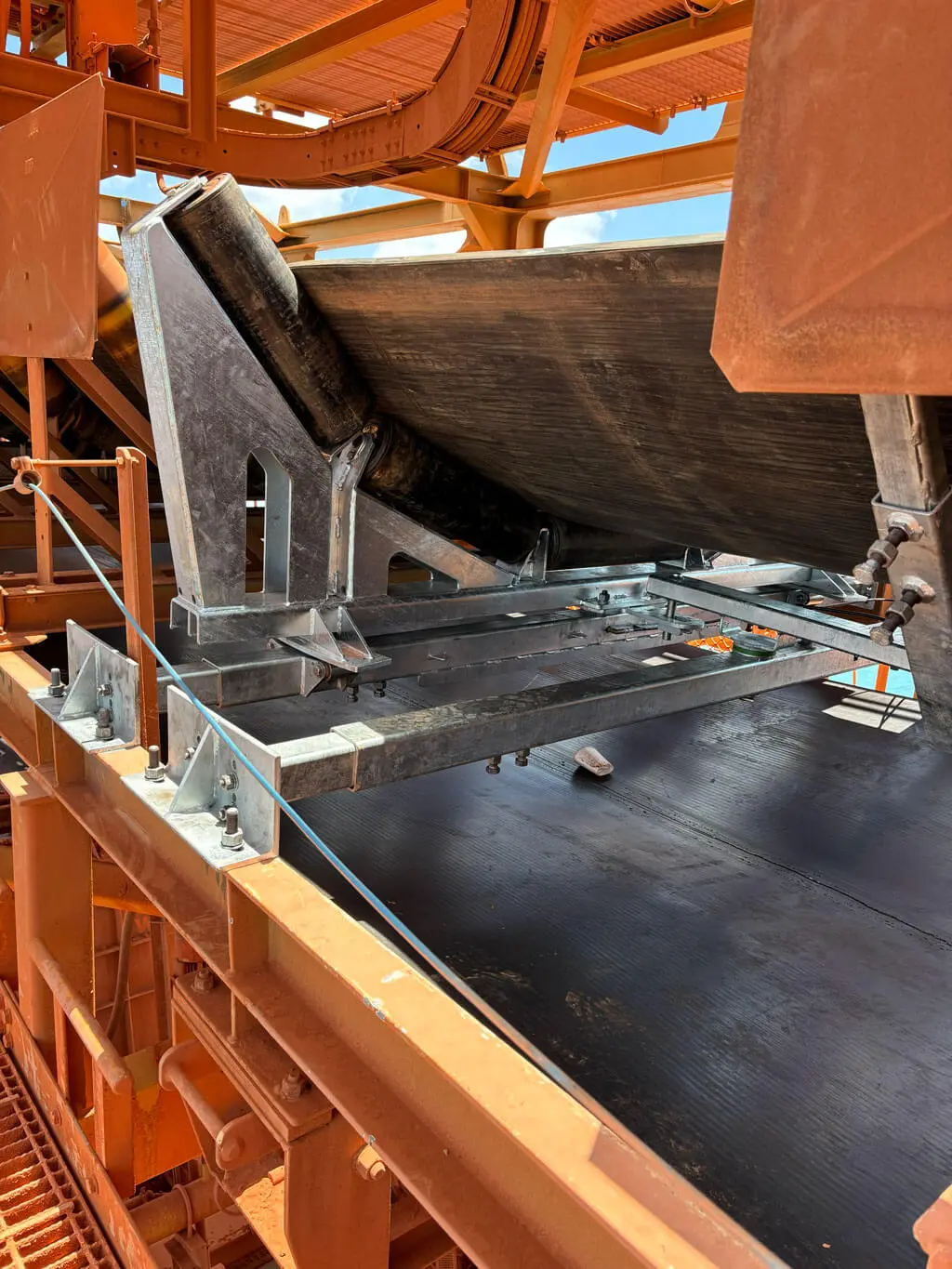
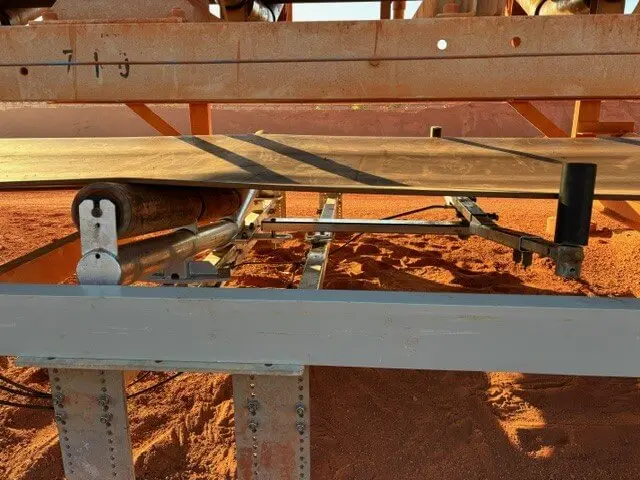
We conducted extensive online and offline field investigations to identify improvement opportunities along critical system areas. Successfully completing detailed scanning and surveying to pinpoint misaligned pulleys throughout the system. We consulted with trusted suppliers to design fit-for-purpose tracking frames positioned strategically for optimal belt control. Our systematic approach included removing unnecessary structure near belt edges, installing heavy-duty guide rollers, and engineering a custom crowned pulley for the take-up trolley. Each intervention addressed specific root causes rather than symptoms, applying our deep understanding of conveyor dynamics and bauxite handling requirements.
Since implementing the engineered hardware solutions, the intermittent severe tracking faults have completely ceased. The new tracking frame design and strategic placement provide superior belt control, while the custom crowned pulley eliminates take-up trolley drift. Structural modifications created adequate clearance, and heavy-duty guide rollers provide additional protection. Even during product side-loading events from poor ore presentation—previously a major trigger for tracking failures—the new hardware maintains belt control, preventing both belt damage and plant trips. This comprehensive remediation has eliminated unplanned downtime, protected the expensive belt asset, and restored reliable operation to this critical production conveyor.